
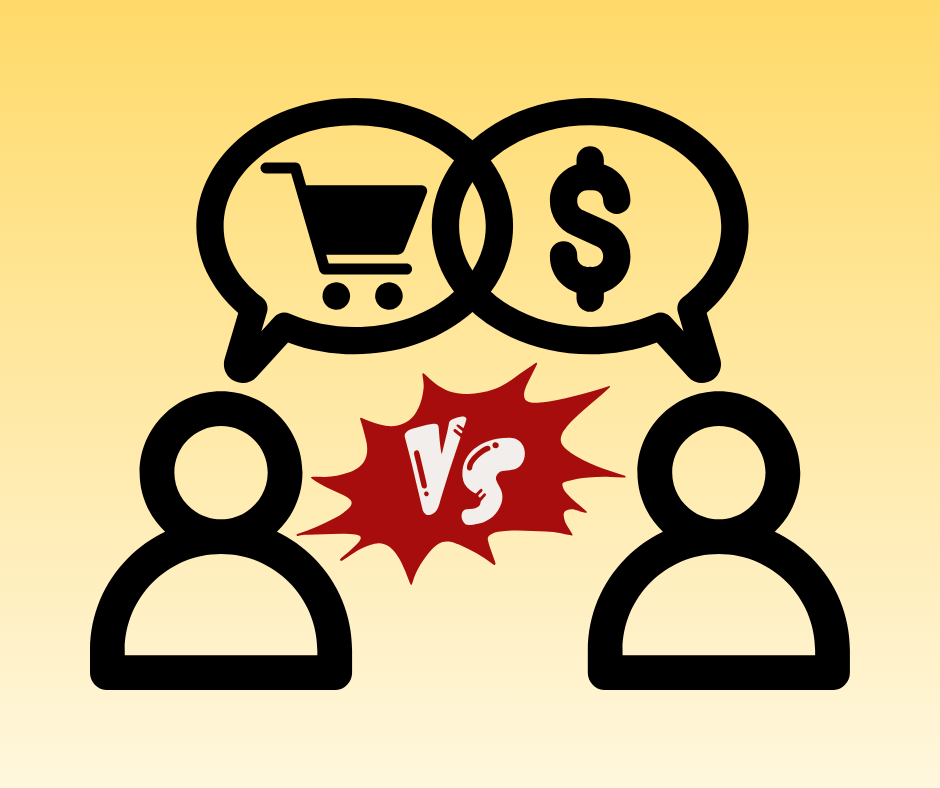
Many businesses use the terms ‘marketing’ and ‘sales’ interchangeably. While these two roles are closely aligned, they serve very different purposes.
Think of them as two bands at a rock concert – marketing is the warm-up act that gets the crowd going, and sales is the main performance. In business terms, marketing creates awareness, interest, and attracts potential customers; sales must close the deal and convert those prospects into paying clients.
What is marketing?
A marketing professional manages all the activities a business undertakes to build awareness, generate interest, and nurture relationships with potential customers. It focuses on understanding customer needs and positioning products or services as solutions.
Examples of marketing activities include:
- Content marketing and blogging
- Social media management
- Email campaigns
- Search engine optimisation (SEO)
- Advertising
- Brand development
The goal of marketing is not necessarily to make an immediate sale. Instead, it aims to attract the right audience, establish trust, and keep the business top of mind until customers are ready to buy.
Effective marketing creates demand. It answers questions, solves problems, and demonstrates expertise before a prospect ever speaks to a salesperson.
What is sales?
Sales professionals focus on the process of turning interested prospects into customers. They have direct interaction with potential buyers, and their goal is to help them make a purchasing decision.
Sales activities often include:
- Prospecting and lead qualification
- Sales presentations
- Product demonstrations
- Proposal development
- Negotiations
- Closing deals
Where marketing speaks to many people at once, sales typically involves one-on-one communication. The objective is straightforward: convert interest into revenue.
A match made in heaven
Each one needs to be given room to work their magic: Marketing attracts qualified leads, and sales converts those leads into loyal customers.
All too often businesses miss this symbiotic relationship, dubbing marketing as “an expense, versus sales who ‘brings in the cash’. Although the focus is different, the end goal for both marketing and sales is effectively the same – the success and growth of the business.
When marketing and sales work together, businesses enjoy improved customer understanding, consistent messaging, and improved business performance overall.
The bottom line
Neither marketing nor sales is more important than the other. They are two sides of the same coin. Companies that invest in both marketing and sales, are far better positioned to attract customers, increase revenue, and achieve sustainable growth than those who focus on only one.
Success happens when marketing and sales are supported equally by the business and work together toward the same goal: helping customers find the right solution.